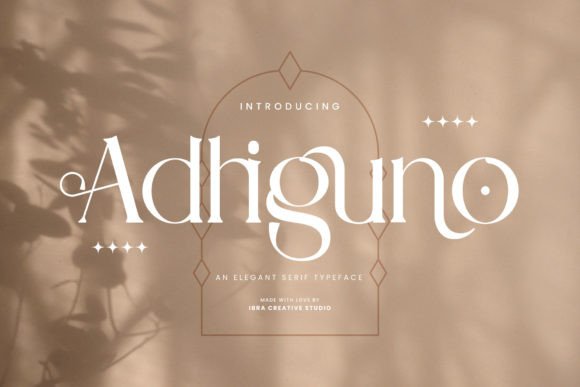
Adhiguno Serif Typeface for Handmade Labels & Invitations
If you've ever held a beautifully printed wedding invitation, admired the quiet elegance of a boutique candle label, or paused to read a hand-lettered farmhouse sign—chances are, a serif font like Adhiguno was doing quiet, powerful work behind the scenes. As a small shop owner who designs printable planner pages, SVG cut files, and custom packaging for local makers, I’ve tested dozens of serif fonts for real-world craft use. Adhiguno stands out—not because it shouts, but because it settles in: refined, legible, and deeply intentional.
Adhiguno is a premium serif typeface built for creators who value both beauty and function. Its graceful serifs aren’t ornamental flourishes—they’re precisely balanced to guide the eye, support readability at small sizes, and hold up beautifully on physical products. Unlike overly delicate serifs that vanish when laser-cut or screen-printed, Adhiguno’s strokes maintain clarity from 8pt product tags to 24-inch wall art. That balance between classic structure and modern restraint makes it ideal for handmade sellers who need typography that feels timeless—not dated—and professional—not stiff.
I reach for Adhiguno most often when designing items where first impressions matter: wedding welcome boards, boutique gift tags, apothecary-style candle labels, and seasonal greeting cards. Its subtle contrast and open letterforms ensure crisp cutting on Cricut and Silhouette machines—even with intricate serifs intact. For example, I recently used Adhiguno for a set of lavender-scented soap labels (printed on kraft paper with matte laminate). The font’s warmth echoed the natural ingredients, while its clean rhythm kept ingredient lists legible without needing a secondary font.
It shines equally in digital printables. My best-selling printable wedding checklist uses Adhiguno for section headers—its vertical rhythm creates gentle visual hierarchy, and customers consistently comment that it “feels luxurious but not fussy.” For planner inserts, I pair Adhiguno’s regular weight with a light sans serif for body text. That combination gives structure without sacrificing scanability—a must when buyers are printing dozens of pages at home.
Where Adhiguno Fits in Your Product Line
Adhiguno isn’t meant for paragraphs—but it’s exceptional for what it *is* designed for: display text that carries emotional weight and brand intention. Think:
- Wedding stationery: Names on invitations, “Mr. & Mrs.” on signage, monogrammed napkin tags
- Product packaging: Small-batch coffee bags, handmade syrup labels, ceramic studio stamps
- Digital downloads: Printable wall art quotes, minimalist holiday cards, boutique-branded social media templates
- Merchandise: Tote bag slogans, mug phrases (“Brewed with Care”), framed embroidery patterns
- Cutting machine projects: Vinyl decals for mason jars, wood-burned signs, iron-on transfers for linen aprons
Because Adhiguno is part of the Script Amp collection, it’s optimized for seamless integration into design workflows—especially when layered with expressive script fonts or clean sans serifs. I often pair it with a relaxed handwritten font for names or accents (like “Emma & James” in script above “October 12, 2025” in Adhiguno), then anchor everything with a neutral sans like Montserrat or Inter for fine print. This trio gives depth, personality, and professionalism—all in one layout.
Practical Tips for Real-World Use
Before sending anything to print or cut, test Adhiguno at your intended size. At 10pt or smaller on matte sticker paper, avoid tight letter spacing—add 10–20 units of tracking to prevent ink bleed. For vinyl cutting, steer clear of ultra-thin serifs on low-resolution machines; Adhiguno’s robust terminals handle standard blade settings just fine, but always run a test cut on scrap material first.
The font includes multiple weights (Light, Regular, Medium, Bold) plus true italics—not slanted copies—and a full set of OpenType features: discretionary ligatures, stylistic alternates, and multilingual support covering Western, Central, and South European languages. That means your French bakery labels (“Pain au Levain”) or Spanish-language printable planners render correctly, without missing accents or awkward substitutions.
File formats include OTF and WOFF, so whether you're prepping an SVG file for Cricut Design Space or embedding typography in a Canva template for Etsy buyers, you’ll have what you need. And yes—it’s licensed for commercial use: you can sell physical products, digital downloads, client-branded templates, and even sub-license within your own packaged design assets—as long as you follow the included license terms (no reselling the font file itself, of course).
Why This Serif Feels Like a Trusted Tool
As someone who’s built a small business around making things that people hold, gift, and display, I care deeply about how typography shapes perception. A poorly chosen font can make handmade goods feel generic. But Adhiguno? It quietly signals care—like the extra stitch in a hem or the weight of quality cardstock. Customers don’t name the font, but they feel its intention. They trust it. That’s why I use it for my highest-touch products: wedding suites, limited-run holiday collections, and signature product lines where brand consistency matters across stickers, tags, and web graphics.
It’s also refreshingly versatile across seasons and styles. In spring, Adhiguno softens beautifully beside watercolor florals. Come fall, it grounds rustic typography with quiet authority on burlap-wrapped favor boxes. And in minimalist black-and-white branding? It adds just enough character to avoid sterility—without demanding attention away from your product.
If you're looking for a serif font that works as hard as you do—supporting readability, elevating perceived value, and adapting across mediums—Adhiguno earns its place in your core design toolkit. Not as a trend, but as a thoughtful, enduring choice—one that grows more useful the longer you use it.